
花好月圆
又一家!美国法律AI公司放弃美国模型,转用Kimi K3_我的网站

A |
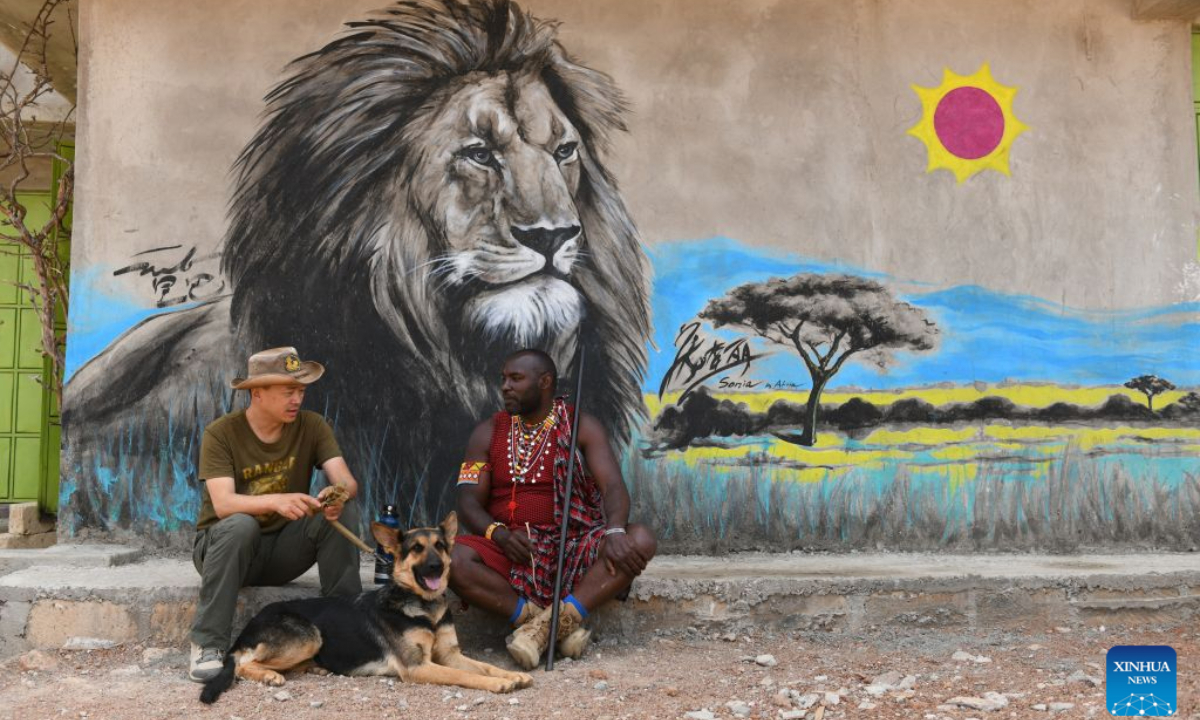
Among them is Chinese conservationist Zhuo Qiang, nicknamed "Simba," the Swahili word for lion. For him, this early-morning routine is driven by a broader mission to achieve human-wildlife coexistence.
In 2010, Zhuo left his job in China at the age of 37 and embarked on a less-traveled path: pursuing wildlife conservation in Kenya.
Without professional training in wildlife conservation, he found himself in a territory then dominated by Western organizations and local practitioners.
But Zhuo decided to stay. "I wanted to prove that Chinese people could also do wildlife conservation," he said.
Initially, Zhuo saw conservation largely through the lens of wildlife science: working in the field, studying animals and collecting data.
Living and working with Maasai communities changed that perspective. "The fate of wildlife was closely tied to the people sharing the same land," he said.
In the Maasai Mara ecosystem, livestock grazing is deeply connected to the livelihoods of pastoral communities. "If local people are asked to stop grazing but are given no alternative source of income, conservation cannot be sustainable," Zhuo said.
That principle laid the foundation for his work with the local community in establishing the Ol Kinyei Conservancy.
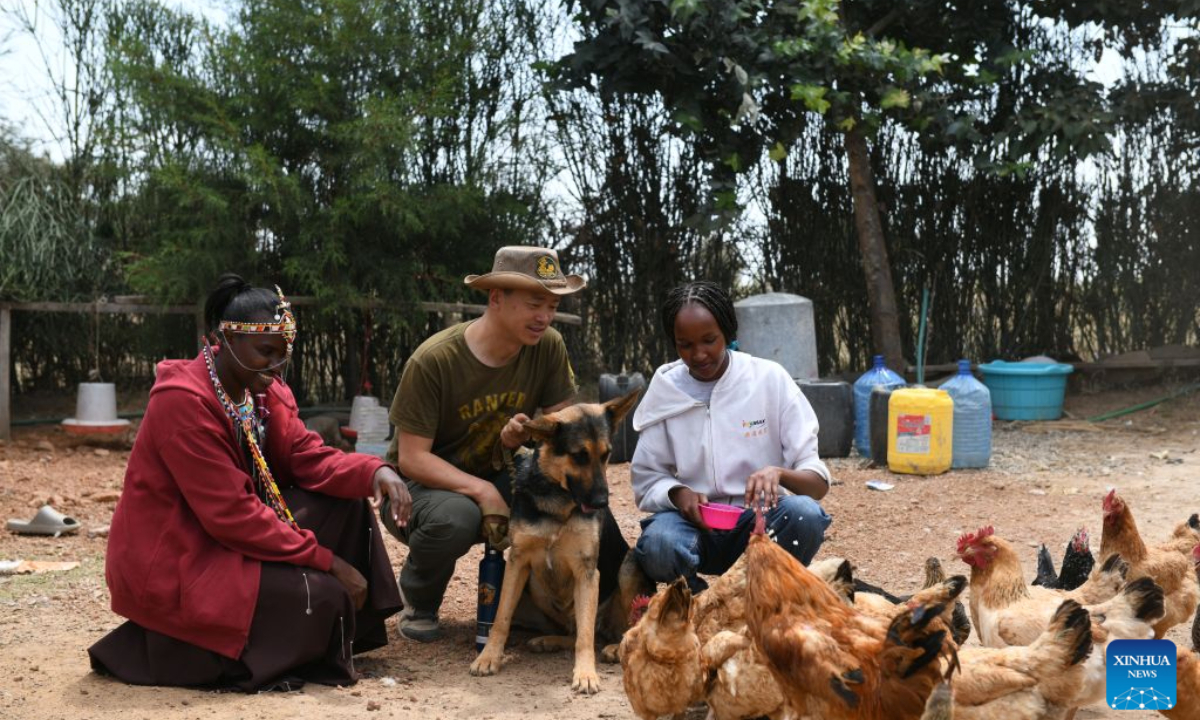
The area had suffered from prolonged overgrazing, with plants and the land itself deteriorating. Under the conservation model, local grazing land was leased and gradually restored, allowing vegetation to recover and creating a more suitable habitat for wildlife, said Zhuo.
Meanwhile, households participating in the scheme receive land-rental income and have access to jobs such as wildlife rangers and tourism workers. Their average annual income has increased from around 500 U.S. dollars to about 3,700 dollars, according to Zhuo.
Some residents from surrounding communities also learned from the experience and brought the approach back to their own grazing areas.
Nowadays, 26 private conservancies have been established around the Maasai Mara National Reserve, covering about 1,600 square km, according to Zhuo.
He believes the network of community conservancies provides additional safe space for wildlife to move and survive, extending conservation efforts beyond the boundaries of a single national reserve and into surrounding communities.
Simon Msago, a Maasai community leader in Ngoswani, said Zhuo's work encouraged more residents to take an active role in conservation.
In the past, many residents saw few direct benefits from wildlife conservation and had limited awareness of its importance. Today, community members are increasingly willing to work as rangers and protect wildlife, creating an effective layer of protection around the conservancies, Msago said.
"Human-wildlife conflict cannot be solved simply through restrictions and prohibitions. The key is to create alternative sources of income so that residents can gain tangible benefits from conservation," Zhuo said.
"That is what makes community-based conservation sustainable -- allowing local people to become part of wildlife conservation rather than bystanders with no stake in it."
While continuing his work in the Maasai Mara, Zhuo has also sought to strengthen exchanges between China and Africa in wildlife conservation.
In recent years, he has visited more than 30 nature reserves and national parks in China, sharing his experiences of community-based conservation in Africa with Chinese counterparts.
"Conservation practices in China and Africa each have their own characteristics, and there is much that the two sides can learn from each other," he added.
。
一家美国法律人工智能(AI)初创公司放弃美国模型,转用中国的Kimi K3。当地时间8月20日,总部位于旧金山的公司Harvey发布声明表示,该公司已基于Kimi K3模型构建了其首个内部模型Harvey Tenet。香港《南华早报》21日报道称,此举凸显出,在开发成本飙升的背景下,西方科技公司正日益转向中国开源权重系统。此前,该公司主要使用Anthropic、OpenAI和谷歌等美国公司的封闭专有模型。Harvey公司在声明中表示,最新内部模型在复杂的法律工作中达到了“最先进”的性能。

B | 人工智能政策研究员西蒙·赫德林表示,Harvey的这一转向,是“开源模型的一个绝佳例子”。他在社交媒体发文指出,开源模型能使开发者能够在特定行业或企业数据上对系统进行后训练,从而提高准确性并降低推理成本。后训练(Post-Training)是指在预训练模型的基础上,针对特定的任务或数据集进行额外的训练。“我们仍处于探索高能力开源权重模型可能性的最早阶段,”赫德林说,“遗憾的是,美国在开发前沿开源权重模型方面落后了。”
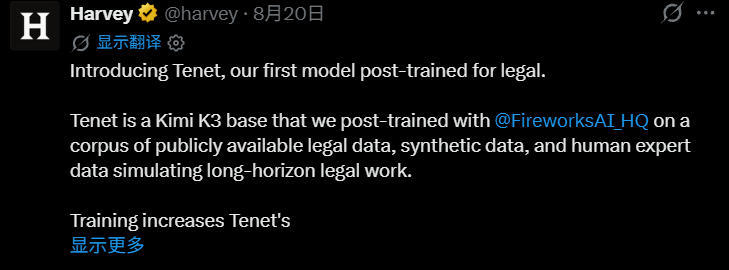
贴文截图据介绍,Harvey公司成立于2022年,获得了OpenAI、红杉资本等美企支持,在今年3月的一轮融资中估值达到110亿美元,主要服务于大型国际律师事务所和企业客户。该公司在声明中提到,经过全面法律数据集训练的Harvey Tenet在一系列复杂、长周期的法律代理任务中,表现超过了其基础模型以及美国前沿系统——包括Fable 5和GPT-5.6 Sol。

C | 据Harvey称,这提高了成本效率。公司称,Harvey Tenet的训练使用了约150块英伟达B300图形处理单元(GPU),耗时两个月。

D | 报道提及,中国开源模型的高性价比,吸引了越来越多的西方企业。

E | 美国电信巨头ATamp;T副总裁马克·奥斯汀近期表示,目前尚未使用任何中国开源权重模型,但公司正在分析包括DeepSeek和月之暗面在内的中国公司的选项。

F |
Current article:http://www.zangjiwuqihuncongcherua.cyou/3oz2sx/ddp2r.html
Published on:13:11:27
最新文章
- 从投资热土到产业高地——天津经开区围绕产业链“筑基、强链、育新”,从投资热土到产业高地——天津经开区围绕产业链“筑基、强链、育新”
- 新锐股份:核心技术人员刘勇离任
- 海报丨“数”览党代会报告!过去五年,石家庄这份成绩单很亮眼
- 2026太原马拉松报名开启:世界田联金标赛事、多维度优化升级!
- 阿根廷、乌拉圭、智利、巴拉圭将联合申办2030年世界杯
- 景东,印度尼西亚第五只独角兽
- SD-WAN 行业深度分析—市场格局、厂商横向对比与选型推荐
- 粤港举行研讨活动 聚焦打造湾区游艇生活圈
- 牵手啤酒音乐嘉年华,“福彩+文旅”奏响夏夜公益之声
- Brexiteers Have the Edge in Tory Race to Replace BoJo, Says Academic
标签云
热门文章
- すでに”ピンチ”か…故障離脱を強いられた主力選手(3)チームの中心打者だが…無念の“開幕絶望”か
- 名记解读哈登骑士谈判:正在构思多套续约方案 预计很快出结果
- 中国卖20万、德国卖47万!国产奥迪价格翻一倍卖到德国 还是比德国便宜
- 普华永道:2026年上半年中国并购市场强势回暖,量价齐升突破近三年高位
- Can humanoid robots move beyond the games?
- 두산에너빌리티·남동발전 “발전소 건설 인력 연락 두절…상황 파악 중”
- Windows 11 Moment 1 更新正式发布 现已可下载
- 双“绿”联手:雷蛇推出 3 款 XBOX 25 周年纪念版外设
- “吉林老人救助重庆游客反遭诬陷”反转 吉林文旅最新回应:正在跟进
- Etawah News : संदिग्ध व्यक्त और ड्रोन की अफवाह से मचा हड़कंप, चौराहों पर लोगों ने दिया पहरा