
主君的太阳(全文在线阅读)>
主君的太阳纯电赛道遇挫!丰田无奈放权:将车型开发主导权交给中国人_我的网站
A | In 1963, just as Martin Luther King Jr. and the other “Big Six” civil rights leaders were in the final stages of planning the March on Washington, my mother, Sybil Haydel Morial, incorporated the Louisiana League of Good Government, a nonprofit created to help African Americans overcome deterrents to voting such as literacy tests. She’d been banned from joining the Louisiana branch of the League of Women Voters because of her race. “That shut door was an epiphany for me,” she wrote in her memoir, “Witness to Change: From Jim Crow to Political Empowerment.” Rather than be deterred, she devoted herself to preparing Black New Orleanians for Louisiana’s nearly-impossible literacy test. Registrars – who were all white – had wide latitude in determining who passed or failed such tests, and they used their authority to fail most Black applicants, thereby keeping them from voting. Ironically, one of the tests required applicants to read the preamble of the U.S. Constitution, intended to “establish Justice” and “secure the Blessings of Liberty,” in the words of the Founding Fathers who authored them nearly two centuries earlier. But in Louisiana, in 1963, justice and liberty still were reserved mostly for white people. On the very day that civil rights activist Medgar Evers was gunned down in his own driveway in Jackson, Mississippi, in June of 1963, my mother picked up the phone to hear, “Morial is going to get what that [racial slur] in Mississippi got.” We had been receiving threatening calls ever since my father, Ernest “Dutch” Morial,” had assumed the presidency of the NAACP in New Orleans (and later the first Black mayor of the city). But after that threatening phone call, my parents took extra precautions: My father would blast his car horn when he pulled up to the house each night, and my mother would flash the carport light several times, all to scare off would-be assassins. The voting rights struggle of my parents’ generation was a steep uphill climb, but as the years went by, they saw barrier after barrier fall, from the 1954 Brown v. Board of Education decision (where the Supreme Court ruled that racial segregation in public schools was unconstitutional) to the Civil Rights Act to the Voting Rights Act of 1965 to the Fair Housing Act of 1968. Now, 60 years after the March on Washington, we are seeing many of those same barriers – and new ones – rise up once again. My parents fought Jim Crow, who used bogus literacy tests and threats of violence to keep Black Americans from the voting booth. By the time I assumed leadership of the National Urban League in 2003, our adversary was James Crow, Esq., who used racial gerrymandering to dilute the political voices of Black Americans. Today, we are battling Jimmy Crow, who wants to disregard the results of elections entirely. The current assault on voting rights is a direct response to the rising influence of the Black vote since the passage of the Voting Rights Act of 1965. As we noted in last year’s State of Black America report, which was subtitled “Under Siege: The Plot to Destroy Democracy,” an anti-democracy wave began to rise after record-high Black voting rates in 2008 and crested with the Supreme Court’s 2013 decision in Shelby County v. Holder to gut the Voting Rights Act. Now, that wave has broken against “The Big Lie,” the relentless campaign to invalidate the free, fair and validated results of the 2020 election. Those who marched in 1963 were fighting for their right to participate in democracy. Those who attacked the Capitol on Jan. 6, 2021, were fighting to obliterate democracy. So far, in 2023 alone, state lawmakers have introduced at least 323 bills to restrict the vote in 45 states. At least 13 of these bills, in 11 states, have passed into law. Even more alarming is the rise of election interference legislation, which would allow partisan interference in the election process. At least 78 bills have been introduced this year in 20 states that would make it easier to, for example, criminally prosecute election officials for simply doing their jobs, set up bogus partisan “review” procedures, or prohibit the use of machines to count ballots for any election. At least four states already have passed such laws. The campaign to exclude Black Americans from the democratic process is gradually being supplanted with a campaign to eliminate the democratic process altogether. Earlier this summer, with its decision in Moore v. Harper, the U.S. Supreme Court rejected the “independent state legislature theory” that extremists have pushed in order to give state legislatures free rein to gerrymander electoral maps and suppress voters of color – and to give cover to their sinister efforts to overturn elections. Still, the court’s decision is unlikely to deter these extremists, who are intent on returning a man to the White House who faces numerous indictments for attempting to invalidate the results of the 2020 election. If those forces succeed, the two-century moral arc that has bent slowly, if unevenly, toward universal suffrage could come to an end. 。 快科技8月24日消息,随着中国新能源汽车产业的快速崛起,国内汽车市场格局迎来彻底重塑,一众传统合资车企的燃油车优势被持续削弱,深耕中国市场多年的丰田也难逃转型困境。此前丰田在华市场业绩一度稳居高位,2021年更是创下194万辆的销量巅峰,但自此之后便开启持续下滑态势。2022年至2024年,其在华销量逐年回落至193.6万辆、188万辆、178万辆,连续三年销量缩水,倒逼品牌加速推进电动化转型。2022年4月,丰田正式在国内开启纯电布局,联合广汽、一汽推出bZ4X。这套源自海外的产品命名逻辑在国内市场水土不服,被消费者调侃为“验证码”。 。
B | 产品失利根源在于集团战略摇摆,丰田一方面认为纯电存在炒作成分,固守混动优势,另一方面又被迫对外公布激进电动化目标,以跟随者姿态观望行业,最终错过了国内电动化发展窗口期。丰田新任社长佐藤恒治也曾公开承认,品牌在纯电车型开发上已经失败。
C | 惨痛的市场教训推动丰田变革在华研发体系,中日双方达成共识,不再依靠全球车型简单本土化改造应付中国市场,由此诞生RCE中国首席工程师体制,丰田首次将整车开发主导权交给中国团队,广汽丰田本土成长的柳文斌出任首任中国首席工程师。
D |
Current article:http://www.zangjiwuqihuncongcherua.cyou/list_kkmhvg/2shku.doc Published on:09:44:18 |

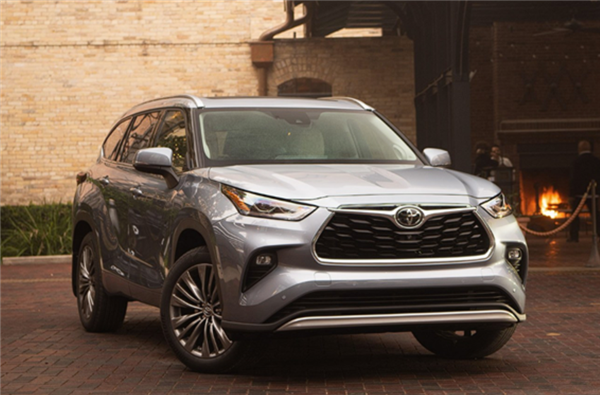 更核心的矛盾来自产品本身,bZ4X基于油电共用的e‑TNGA平台打造,并非原生纯电架构,空间表现、平台拓展能力存在先天短板,不支持高压快充与长续航电池等主流纯电配置,起售价却高达19.98万元。不合理的产品定位让bZ4X遭遇市场滑铁卢。2023年一季度,广汽丰田bZ4X三个月累计销量不足2000辆。进入2024年,该车月销长期停留在三位数,最低月份仅卖出60台,在高速扩张的新能源市场几乎毫无竞争力。


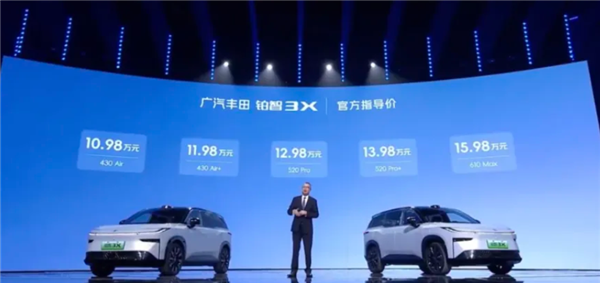 团队耗费三个月走访全国开展用户调研,从车机系统、内饰用料到智驾、充电场景,全部按照国内用户实际需求重新梳理。率先亮相的铂智4X只是过渡产品,仅是bZ4X的改款换名版本,核心硬件架构没有改动,主要用来为全新车型争取研发周期。2025年3月,真正由中方主导开发的铂智3X正式上市,指导价10.98‑15.98万元。该车从立项、设计到配置标定全程由国内团队把控,无需日本总部审批确认,市场响应效率大幅提升。团队精准捕捉行业趋势,将高阶智驾下放至520km续航版本,完成1200多个总成、600余项零部件的快速调整。同时车型本土供应商占比达65%,率先在15万级车型下放激光雷达,精准适配二三线城市燃油车置换家庭用户,成为丰田本土化电动转型的核心突破。