势不可挡
Rare dragon-phoenix clay relics found in 4,300-year-old tomb in Inner Mongolia_我的网站

A |
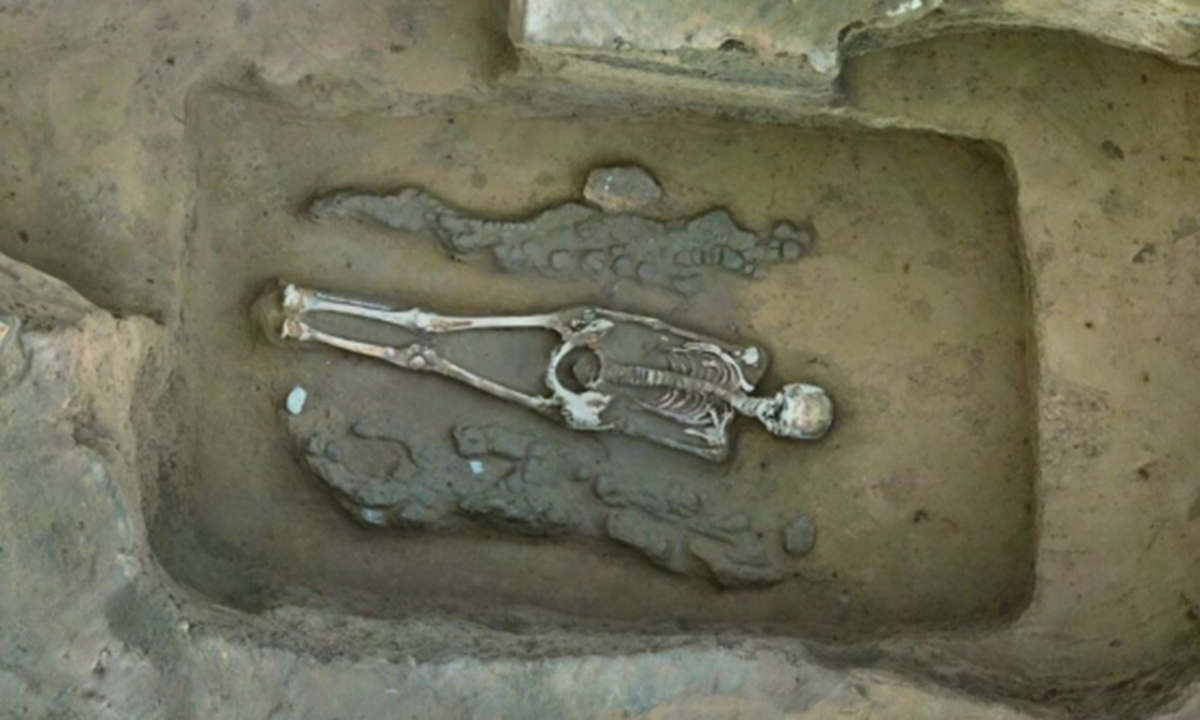
The two figurines were placed symmetrically on either side of a skeleton in a rectangular earth-pit tomb at the Zhaizita stone-walled site, a major Longshan culture settlement spanning 420,000 square meters in Inner Mongolia's Jungar Banner, Ordos City.
Radiocarbon dating places the burial at approximately 2300 BC, during the late Neolithic Longshan culture, per Xinhua.
Sun Jinsong, head of the Inner Mongolia Institute of Cultural Relics and Archaeology, told the Global Times that the tomb owner was buried lying face-up with limbs extended and head pointing northeast.
A turquoise-inlaid jade disc rested near the right side of the body's neck. The dragon-shaped clay piece was positioned on the right side of the body, aligned with the head, while the phoenix-shaped piece on the left was rendered as if soaring upward.
Stable isotope analysis of dental enamel collagen revealed a diet based on millet agriculture but with an unusually high intake of animal protein or special food resources.
"The findings indicate the tomb owner possessed prominent social status and privileged material resources during their lifetime," Sun said.
Sun emphasized the discovery rewrites the timeline of tangible dragon-phoenix symbolism in northern China.
"This is the earliest and most clearly defined dragon-phoenix combination found in northern China so far. It pushes back the materialized representation of dragon and phoenix to the Longshan era," Sun said. "The find provides precious material for studying the spiritual beliefs and funeral concepts of the Longshan people."
Sun added that the discovery underscores the unique contributions of the Hetao region - the great bend of the Yellow River - to early spiritual and cultural creativity in China, supporting the view that Chinese civilization developed through a pattern of unity in diversity.
According to media reports, the Longshan culture is renowned for advanced stone city construction, sophisticated handicraft techniques and mature ritual systems across the Yellow River basin.
Perched along the Yellow River basin, the Zhaizita stone-walled site ranks among the earliest known stone-enclosed fortress and ceremonial sites in northern China.
。

B | 新能源汽车、储能电站,都离不开它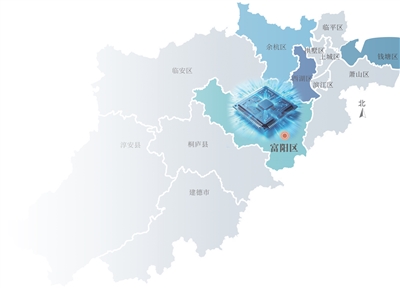 富阳正在打造“浙江光谷·富春芯城” 制图 高薇
 富春江畔的富阳8月6日起,都市快报推出《13天,点亮一座未来之城》系列报道,全景呈现杭州各区、县(市)特色发展路径,用13块“拼图”拼成一幅更高水平创新活力之城的新图景。

C | 第四天,点亮富阳区。富春江南岸,杭州富加镓业科技有限公司(以下简称“富加镓业”)的研发中心里,静得出奇,只有设备运转时发出的轻响。台子上摆着一排外形像“炼丹炉”的设备,里面“炼”着一种叫氧化镓的白色粉末。炉膛里的温度,高达1800℃。8个小时后,炉盖缓缓抬升,一个通体黝黑、形态匀整的圆锥状晶体出现在眼前,底部直径精准地卡在305毫米,也就是12英寸。今年3月,富加镓业首次研制出12英寸氧化镓单晶,刷新世界纪录,成为全球首家掌握这一技术的企业。“目前,国际上氧化镓衬底的最大尺寸是8英寸,冲12英寸,并不是简单的尺寸放大,而是生长技术的代际飞跃。

D | ”富加镓业副总经理黄浩天说。近日,富加镓业率先开展12英寸氧化镓MOCVD外延技术研发,成功将8英寸氧化镓MOCVD外延工艺首次外推至12英寸。

E | 这意味着,氧化镓芯片的“地基”做得更大了,未来能造出性能更强、成本更低的电力电子器件。为什么要造12英寸的?氧化镓是一种半导体材料,你可能没听说过它,但用它做出来的功率器件,能扛住更高的电压、承受更高的温度、损耗还更小,新能源汽车、储能电站、智能电网、数据中心,都离不开它。和目前最常用的半导体材料“硅”比起来,氧化镓就像个“特种兵”,更耐高温、更耐高压、性能更强。这个“特种兵”,特别难“伺候”。“氧化镓是单斜晶体结构,各向异性极强,生长过程中哪怕微小的参数扰动,都可能产生杂晶、引发开裂;尺寸越大,控制难度呈指数级上升。”黄浩天说。2019年,富加镓业落户富阳,团队只掌握2英寸小尺寸晶体的生长技术,距离最低6英寸衬底产业化的门槛,还有巨大的差距。

F | “当时,氧化镓产业链在国内近乎空白,更少有企业布局外延、器件配套,美、日企业长期垄断高端衬底材料,对我国实施出口管制。”黄浩天说。怎么啃下这块硬骨头?团队在设计阶段就引入数值模拟技术,精准匹配氧化镓晶体的生长规律;同时,研发自主可控的生长装备,对炉内温场、气流、晶体运动状态实现了微米级的精度调控。

G | 无数次工艺调试之后,大尺寸单晶生长的技术瓶颈终于被突破。

H | 为什么12英寸这么重要?目前,主流的硅基生产线用的就是12英寸规格。氧化镓晶体长到12英寸,就可以直接“借用”现有的成熟产线,未来规模化量产之后,下游功率器件的制造成本会大幅降低。眼下,富加镓业国内首条6英寸氧化镓单晶及外延片生长线已具备量产能力,计划年底建成年产1万片6英寸的生产线。

I | 同时,富加镓业也在稳步推进8英寸量产、12英寸技术落地。

J | 从2英寸到12英寸,富加镓业用了不到7年时间。

K |
Current article:http://www.zangjiwuqihuncongcherua.cyou/news/20260826_650.doc
Published on:08:15:46


