
年代秀
售7.88万/共推出1款配置 比亚迪海鸥自在版正式上市_我的网站

A |
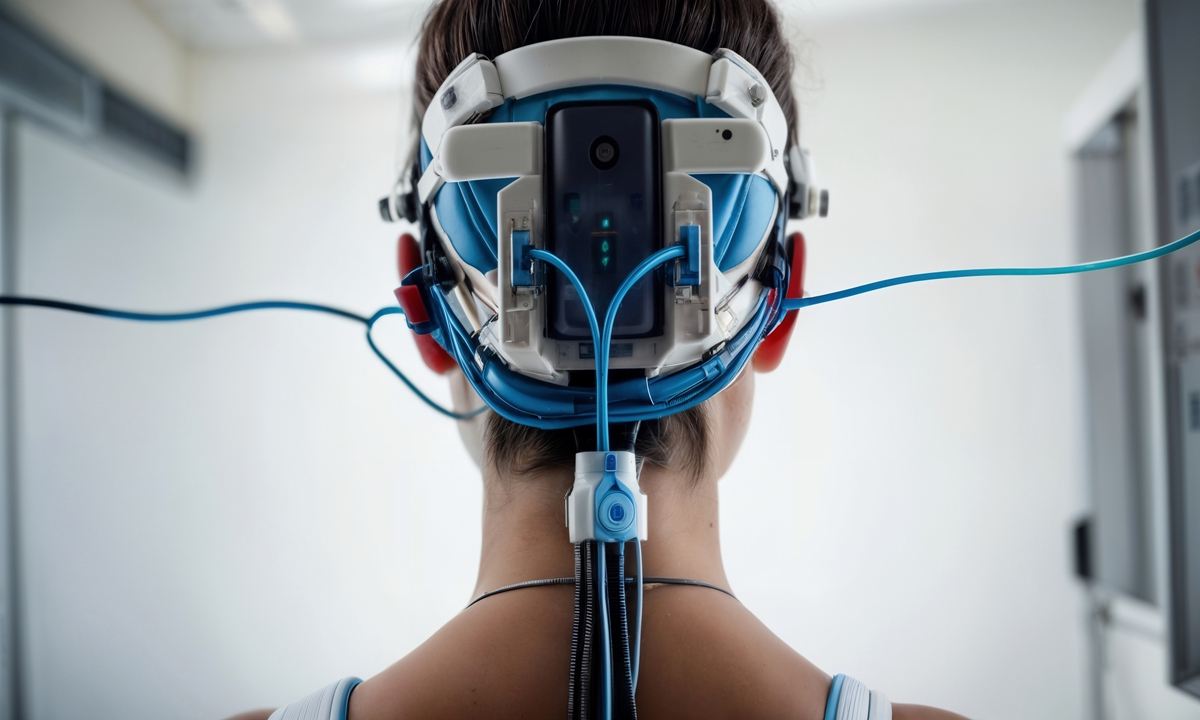
Chinese researchers have developed a multifunctional electrode coating that addresses key challenges in long-term brain-computer interface (BCI) implantation, including signal loss and tissue adhesion, bringing BCI one step closer to clinical application, the Global Times learned from the research team behind the findings on Sunday.
As an emerging field combining neuroscience and artificial intelligence (AI), BCI faces a major challenge of ensuring long-term compatibility between electrodes and brain tissue. Previous clinical trials showed that immune responses could cause implanted electrodes to retract after just three months, severely reducing signal quality and the number of available channels.
This problem stems from chronic inflammation triggered by implants, which creates insulating scar tissue around electrodes and separates them from neurons. Irreversible adhesion between electrodes and brain tissue after long-term implantation also makes device removal risky, potentially causing brain injury during follow-up surgeries.
Experiments showed that flexible neural electrodes coated with this material could operate stably in the brain for more than 300 days and could be safely removed without causing damage. This means the universal coating technology can make electrodes not only operate stably over the long term but can also be safely removed and replaced after aging, paving the way for long-term BCI applications.
Developed by the research team led by Zhang Wei at the Technical Institute of Physics and Chemistry, Chinese Academy of Sciences, associated with Beijing Tiantan Hospital, Shanghai Institute of Microsystem and Information Technology and NeuroXess, a high-tech life science company specializing in BCI technologies, the cationic alternating peptide electrode coating preserves electrode flexibility and conductivity, while offering antibacterial, anti-protein adsorption and immune-rejection-inhibiting functions.
A 300-day animal study showed the coating's effectiveness. Bare electrodes experienced a sharp loss of recording capability after 90 days of implantation and could barely detect neuronal signals after 300 days. In contrast, coated electrodes maintained stable recording channels and consistently captured neural signals above 155 microvolts.
In terms of neural modulation, after 300 days of implantation, conventional electrodes required a current of 100 microamps to induce weak limb responses, while coated electrodes triggered clear movements with only 2 microamps, improving modulation efficiency by 50 times.
Notably, the removal tests highlighted a key advantage of the coating that electrodes no longer form irreversible bonds with brain tissue. In the experiments, the coated electrodes were removed intact, with minimal damage to the surrounding brain tissue, Zhang told the Global Times on Sunday.
。
[ 新车上市] 6月30日,比亚迪旗下小型电动车——海鸥自在版正式上市,共推出1款配置,售价为7.88万元。值得一提的是,在比亚迪西安工厂内,随着一辆比亚迪海鸥缓缓驶出总装线,海鸥100万目标正式达成。从上市到累销百万,海鸥仅用27个月时间。该车依托e平台3.0技术,搭载智能座舱高阶版-DiLink 100等,为其带来不错的产品竞争力。
。
B | 关于新车详细售价,请见下图:

C | 车尾部分,贯穿式尾灯具有很强的辨识度,两侧尾灯造型比较犀利。

D | 后保险杠的造型与车头形成呼应,另外还有大尺寸扰流板和扩散器提升运动感。车身尺寸方面,新车长宽高分别为3780/1715/1540mm,轴距为2500mm。

E |
Current article:http://www.zangjiwuqihuncongcherua.cyou/3ml/xcha.xlsx
Published on:13:31:26