
千王之王
US judge’s halt to Pentagon's 'military company' label on WuXi AppTec proves arbitrary blacklists 'not beyond challenge': experts_我的网站

A |
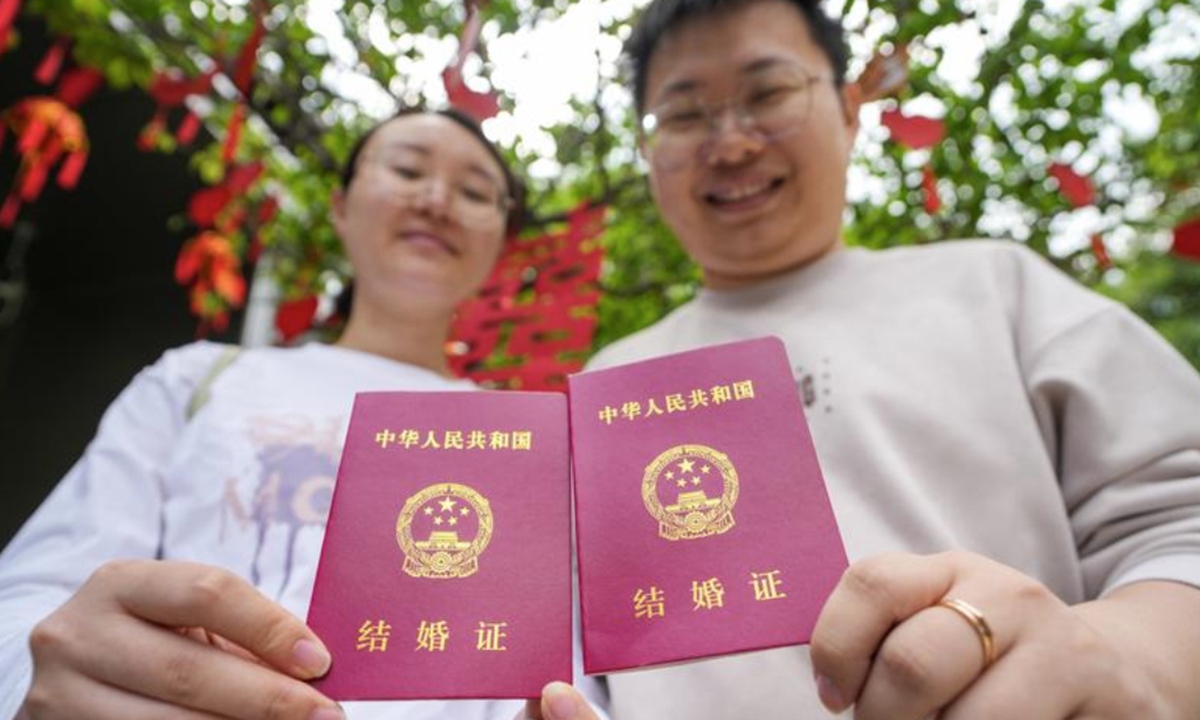
China registered 3.275 million marriages in the first half of this year, down 264,000 from the same period last year, while 1.383 million divorces were recorded, according to data released by the Ministry of Civil Affairs on Wednesday.
According to statistics, China recorded 3.539 million marriages and 1.331 million divorces in the first half of 2025, compared with 3.43 million marriages and 1.274 million divorces in the same period of 2024. couples registered for divorce
China's annual marriage registrations peaked 13.469 million couples in 2013, then entering a steady in 2014. The figure fell below 10 million in 2019, dipped under 8 million in 2021, and fell further to 6.835 million in 2022, -- the first time it had dropped below 7 million -- before rebounding slightly to 7.68 million in 2023.
In recent years, the government has streamlined marriage registration procedures to make it easier for couples to register. For example, in 2025, China introduced the first major revision to its marriage registration regulations in more than two decades, allowing couples to register their marriage at any eligible civil affairs office nationwide and eliminating the household registration booklet as a mandatory document.
China's total population stood at 1.4 billion in 2025, with an average household size of 2.52 people, according to the results of a nationwide population sample survey released by the National Bureau of Statistics on May 22, 2026. The nation had 717.2 million males, about 51.03 percent of the total population, and 688.2 million females, in 2025.
Global Times
。
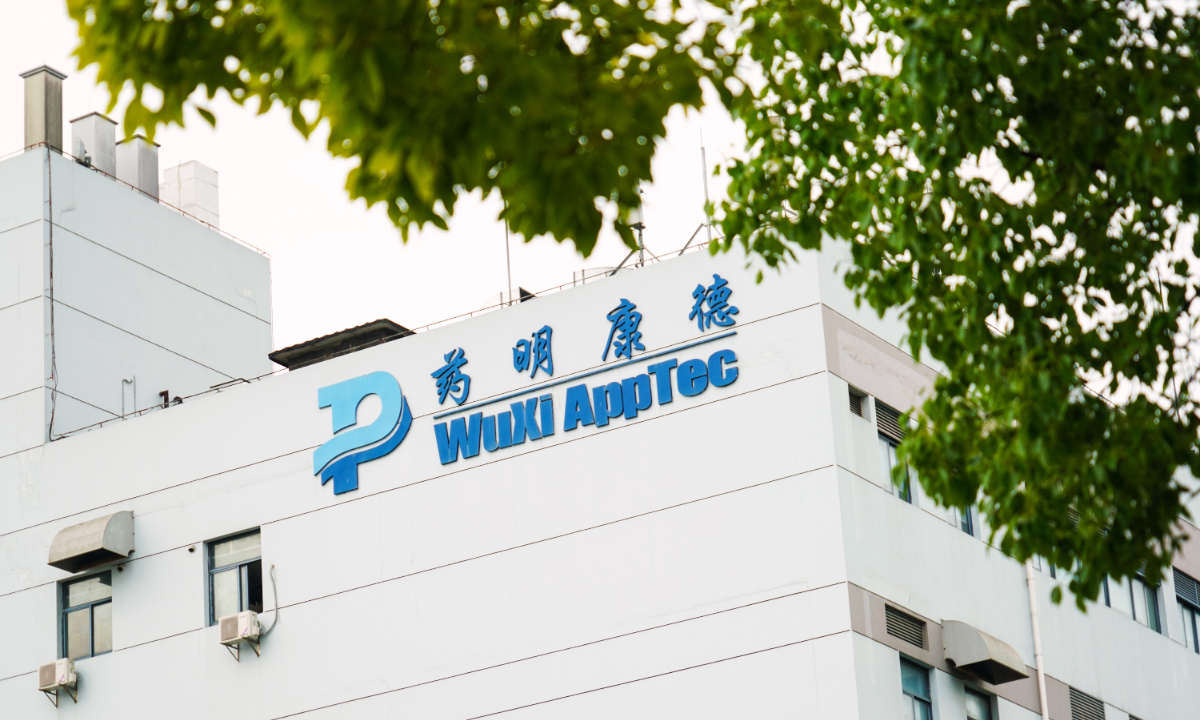
A US federal judge on Friday temporarily "barred the Pentagon from including Chinese biotechnology group WuXi AppTec on a list of companies believed to support Beijing's military," according to Reuters. Chinese experts said the ruling sends a positive signal for Chinese companies operating in the US, showing that Washington's arbitrary, fact-deficient national security blacklists are not beyond challenge and that firms should make greater use of legal means to defend their legitimate rights.
US District Judge James Boasberg issued an order blocking enforcement of the designation of WuXi in June after the company filed suit. WuXi in a statement welcomed the court's ruling, saying it "relieves us from the immediate adverse consequences" of the Defense Department's designation during the litigation. "We believe that the facts, as demonstrated in our court filings, will prevail after an objective and fair judicial review," a WuXi spokesperson said, according to the report.
A South China Morning Post report noted that the ruling represents an early legal victory for one of China's largest pharmaceutical research and manufacturing service providers and a setback for Washington's expanding use of national-security restrictions against major Chinese commercial companies.
Gao Lingyun, a research fellow at the Chinese Academy of Social Sciences, told the Global Times that the Pentagon's controversial "list-first, evidence-later" approach has bred massive operational uncertainty for Chinese enterprises conducting legitimate business in the US. By arbitrarily imposing restrictive labels before presenting credible proof, Washington creates an opaque and unpredictable regulatory environment that disrupts normal commercial expectations.
The US Department of Defense released its updated Section 1260H list on June 8, marking the first time WuXi AppTec was formally included, alongside Alibaba, Baidu, BYD and Unitree Robotics, among others.
On June 12, WuXi AppTec announced it had filed suit against the Department of Defense in the US District Court for the District of Columbia. The company said the department's decision was erroneous and lacked factual basis or support under applicable statutes and case law.
He Weiwen, a senior fellow at the Center for China and Globalization, noted that when Chinese companies face unfair and unjustified suppression in the US, they cannot rely solely on corporate statements or diplomatic representations; they must also protect themselves through legal means. Filing suit in federal court is entirely necessary and correct, he said.
"In the past, quite a few Chinese companies had nothing to do with so-called military matters but were hit with US countervailing and anti-dumping measures. Many won their cases after appealing to the Court of International Trade. Legal recourse is an indispensable tool and one we need to take more seriously," he said.
In January 2021, Xiaomi was placed on a similar Pentagon list. The Chinese company later announced on May 26, 2021 that a US court has removed the company's designation as a military-related company and lifted all restrictions on US persons buying or holding its stock, Reuters reported.
The designation has so far had little impact on WuXi AppTec's business. The company reported on August 3 that first-half revenue rose 38.9 percent year-on-year to 28.9 billion yuan, while net profit attributable to shareholders climbed 29.4 percent to 11.08 billion yuan — its first half-year profit above the 10-billion-yuan mark, said media reports.
When asked about US placing several Chinese technology companies including Alibaba, Tencent, BYD, on a list of firms that it says aid China's military, Chinese Foreign Ministry spokesperson Lin Jian said that China firmly opposes the US overstretching the concept of national security and formulating various types of discriminatory lists to go after Chinese businesses. "We urge the US to correct its wrongdoings, and stop the unwarranted suppression of Chinese businesses. China will do what is necessary to firmly protect their legitimate and lawful rights and interests," said Lin.
。
Current article:http://www.zangjiwuqihuncongcherua.cyou/bk0sj5i/20260826/77624.html
Published on:04:28:05
我的网站最新文章
- China to revise regulations on housing provident fund management
- Dhurandhar Box Office Day 3: Ranveer Singh's Film Crossed Rs 100 Crore Mark
- 现场评|乐见更多非遗从展柜走向街巷
- 大项目一线探访|小小互感器,撬动十亿大产业
- EconoScope | China's 'golden mega-ring' reveals next phase of transport development
- 里奇·保罗:热火的体系能让克莱事半功倍 他只需要安心把球投进
- 全国市场监管系统查办食品添加剂滥用
- US says Iranian drones breach sanctions
- 北京监狱开通支付宝扫码押金:每月一次,最高每次1000元。
- Man pleads guilty to murder in 2021 hit-and-run spree that killed steakhouse chef
- 6-22!追梦:火箭最好的进攻手段就是抢进攻板 这就是他们的风格
- 【套利】990!豆粕菜粕价差处于历史高位豆粕相对菜粕被高估
- 文班亚马:不怕被遗忘 名利只锦上添花
我的网站随机推荐
- 哥俩好:“以软补硬” 打造行业里的“驰名商标”
- Turkey coal mine explosion kills 41
- 市委巡察组来绥巡察动员会议召开
- SEVENTEEN's DK and SEUNGKWAN Team Up for New Unit; Announce Release of First Album
- 兴城市召开“两优一先”表彰大会
- 潞安化工集团有限公司原副总经理韩玉明被“双开”
- 国家能源局:截至7月底,我国电动汽车充电基础设施(枪)总数达到2368.3万个
- 截至8月10日,冀疆班列累计开行64列 助力河北制造业拓展西北市场
- 6 Most Romantic K-Dramas For Every Mood and Moment
- 工信部:“十四五”在全国认定200个左右中小企业特色产业集群,引导和支持地方培育一批省级集群_发展_创新
- 雷克萨斯中国工厂正式开工建设 2027年投产 将生产新能源车
- 华尔街35岁投行员工猝死,曾是美陆军特种兵,死前连续每周工作超100小时
- 库里神仙漂移三分众生相 小桂子瘫倒 老板起立 老板娘比心